Clavicle nonunion
and malunion
After a clavicle fracture, the bone may heal in a deformed position (malunion) or fail to unite (nonunion). These are distinct conditions, and not all patients need surgery.
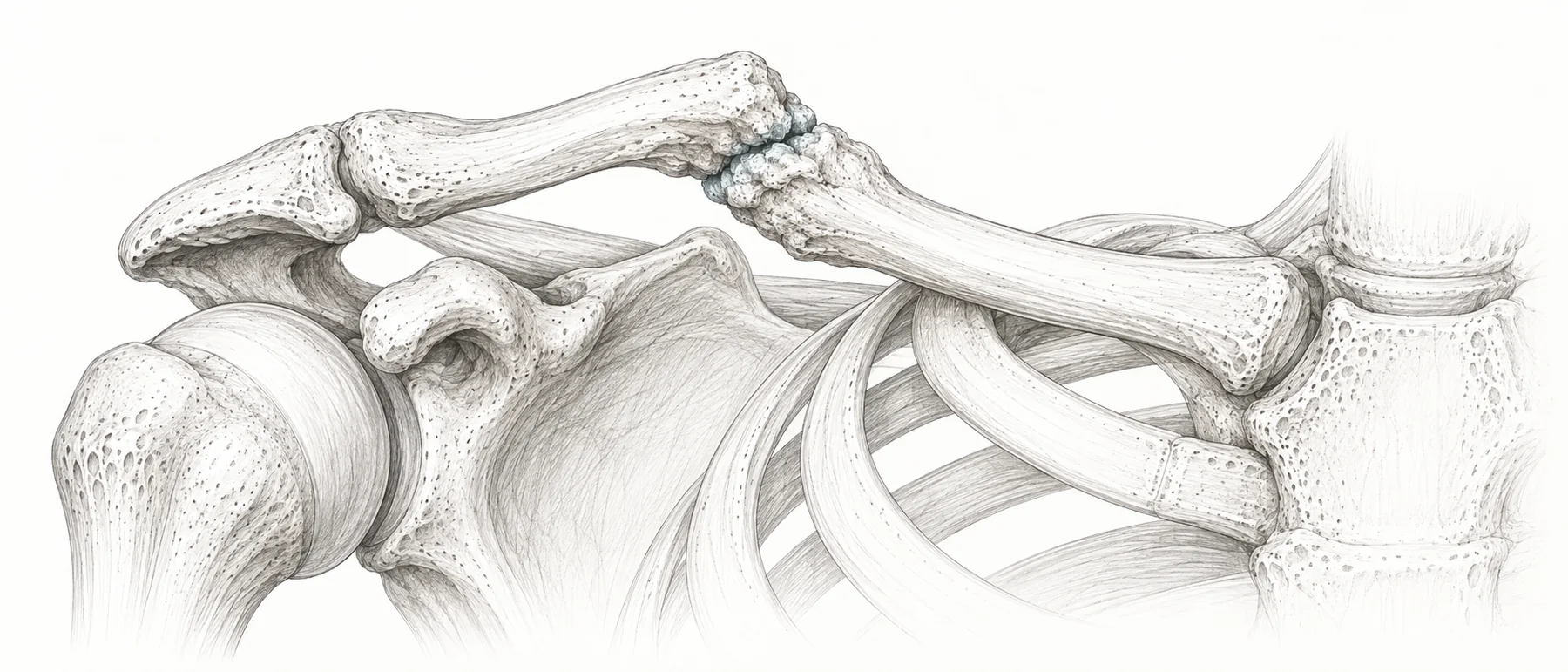
Cal vicieux : consolidation osseuse avec déformation.
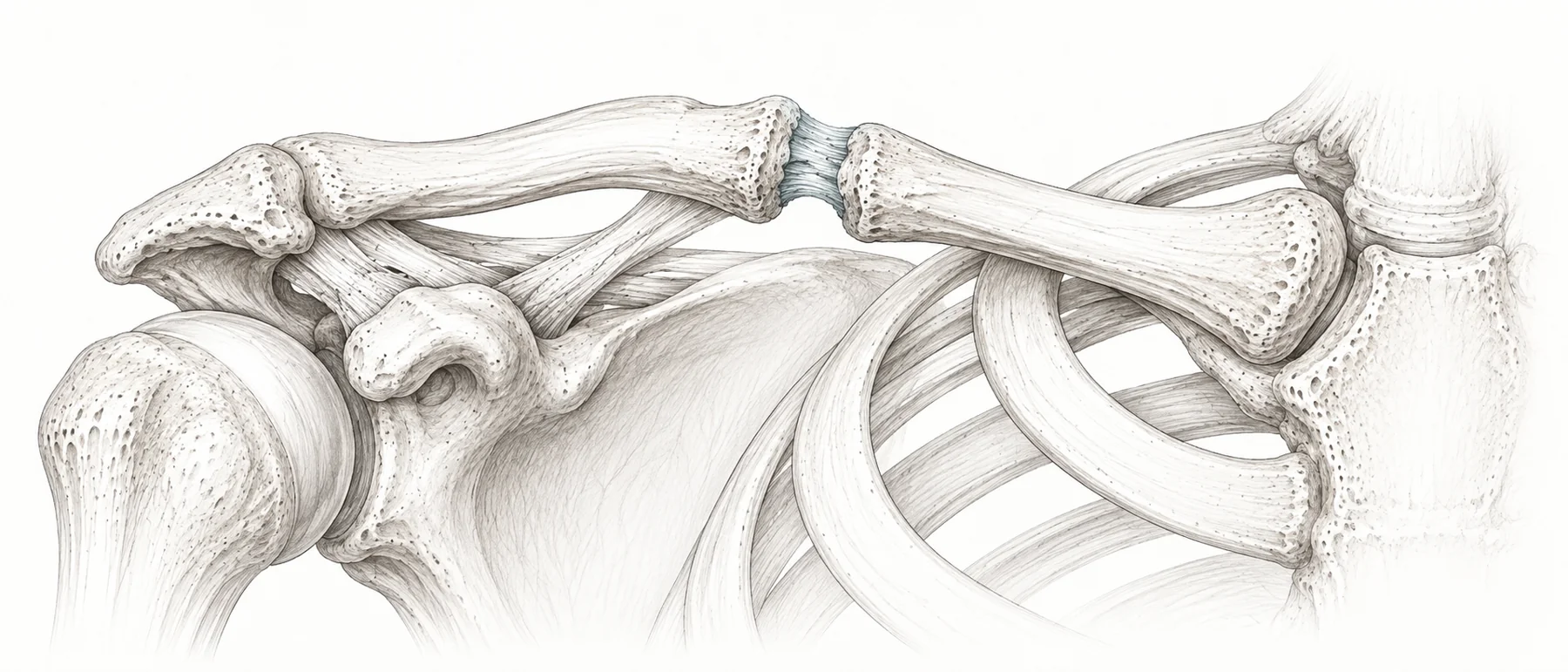
Pseudarthrose : absence de consolidation durable avec un foyer potentiellement mobile.
Understanding impaired healing
The clavicle connects the shoulder to the chest. A displaced fracture may unite with shortening, angulation or a prominent lump (malunion), or may fail to form a solid bony bridge (nonunion). Plate fixation is more commonly considered today for markedly displaced adult midshaft fractures because it reduces nonunion risk, but not every fracture requires surgery.
Malunion: when a healed bump becomes troublesome
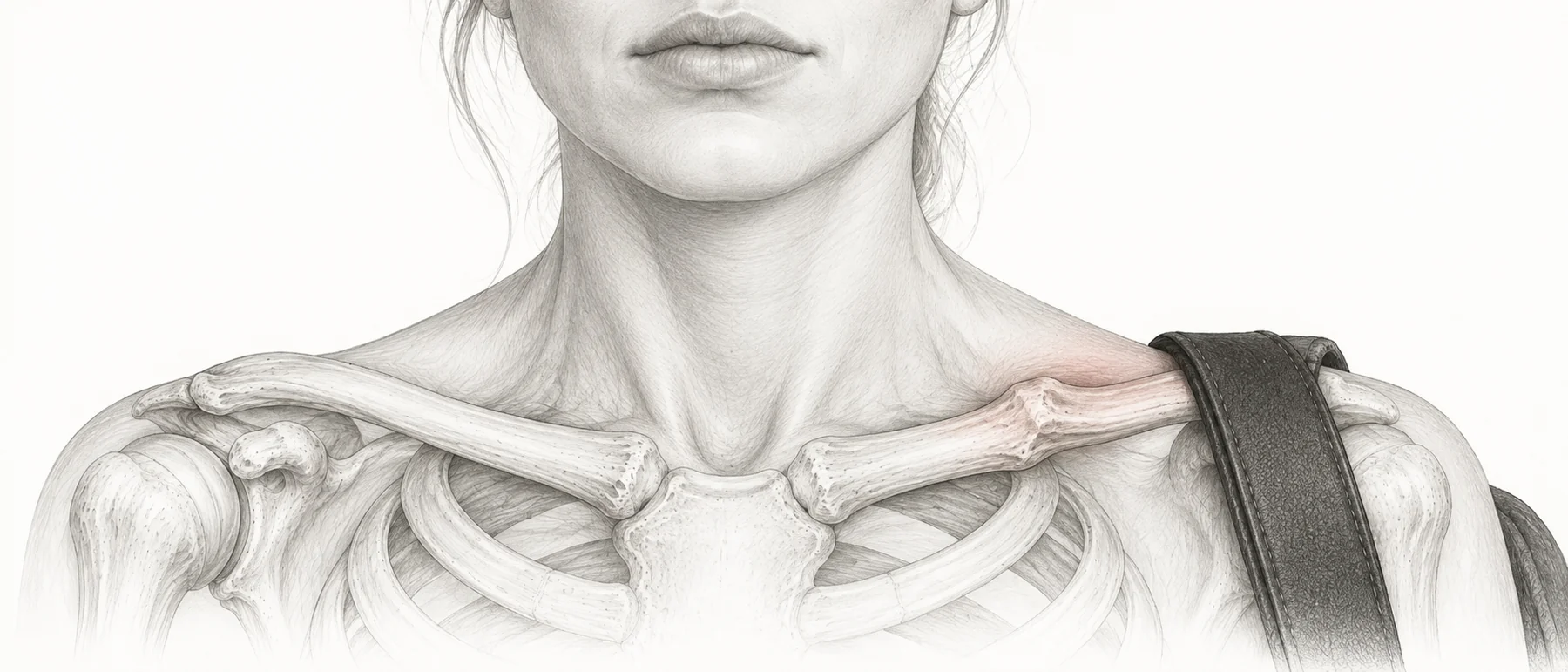
Malunion is common after displaced fractures managed without surgery. If it is painless and function is good, leaving it alone is usually best. Some patients develop focal tenderness from a bony prominence, soft-tissue irritation, pain under backpack straps or with lifting and sports. A visible deformity may also cause cosmetic concerns, particularly with low-neckline clothing.
Corrective osteotomy
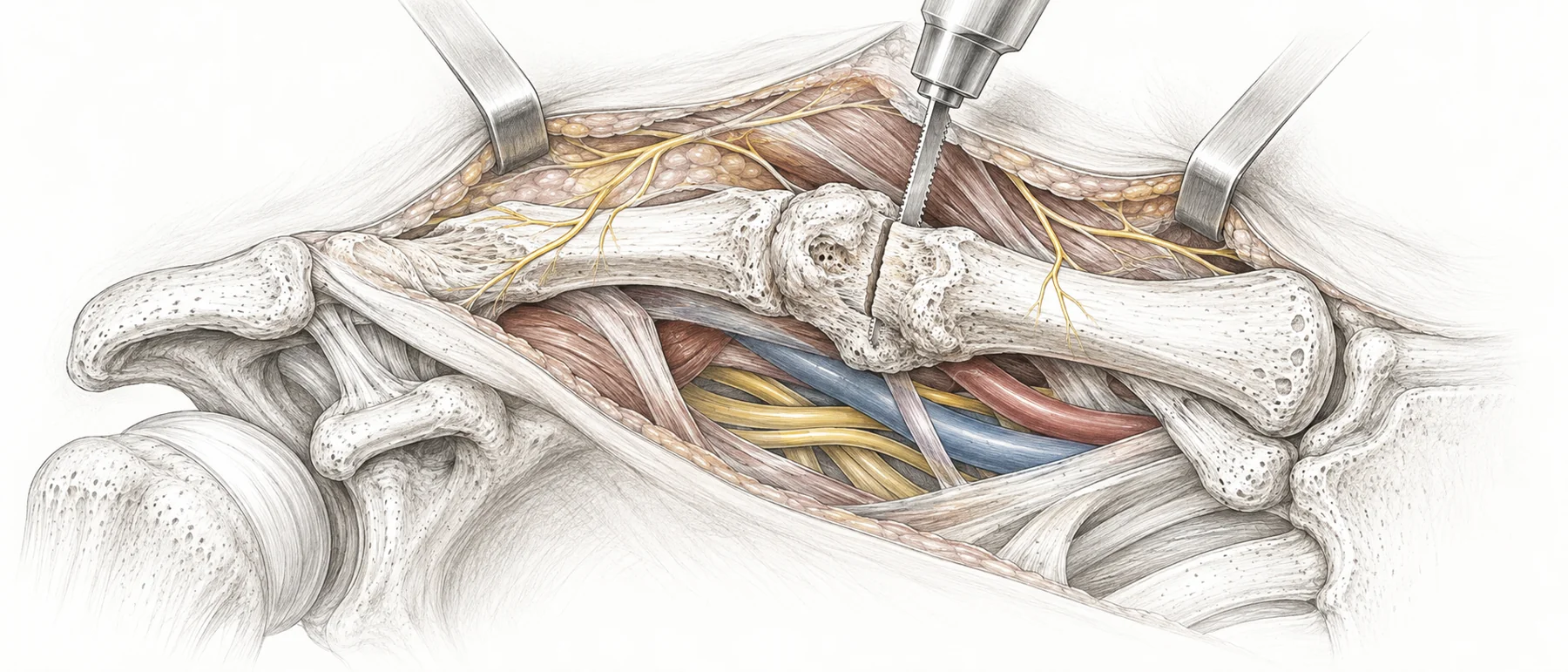
In carefully selected symptomatic patients, the healed bone is divided in a controlled fashion using an oscillating saw (osteotomy), remodelled and realigned. Scar tissue is released cautiously. The superficial supraclavicular sensory nerves and deeper brachial plexus and subclavian vessels must be protected. Fixation uses an appropriately contoured plate; grafting may be needed if realignment creates a bone defect.
Nonunion: when the fracture remains mobile
With nonunion, fibrous tissue can form between the bone ends and the fracture site may behave like a painful false joint. Patients may report tenderness, motion at the fracture site, weakness and fatigue. Risk factors include smoking, marked displacement, comminution, open injury, inadequate stability and impaired bone biology. Nonunion may be hypertrophic, hypotrophic or atrophic; a septic nonunion involves infection and requires specific management.
How is it diagnosed?
Examination looks for focal tenderness, abnormal motion, skin problems and neurological or vascular symptoms. Plain radiographs are first-line tests. CT can help assess bony bridging, often around three to six months if healing is uncertain or surgery is considered. At three months, delayed union is not necessarily established nonunion. Infection should be excluded when suspected.
Can nonoperative treatment help?
When symptoms are mild and healing is still progressing, observation and optimisation of nutrition and mechanical loading may be appropriate. Treat confirmed vitamin D or other deficiencies and stop smoking completely. Shock-wave therapy has limited evidence for clavicle nonunion and is not a routine substitute for surgical fixation.
Long plate fixation and iliac crest graft
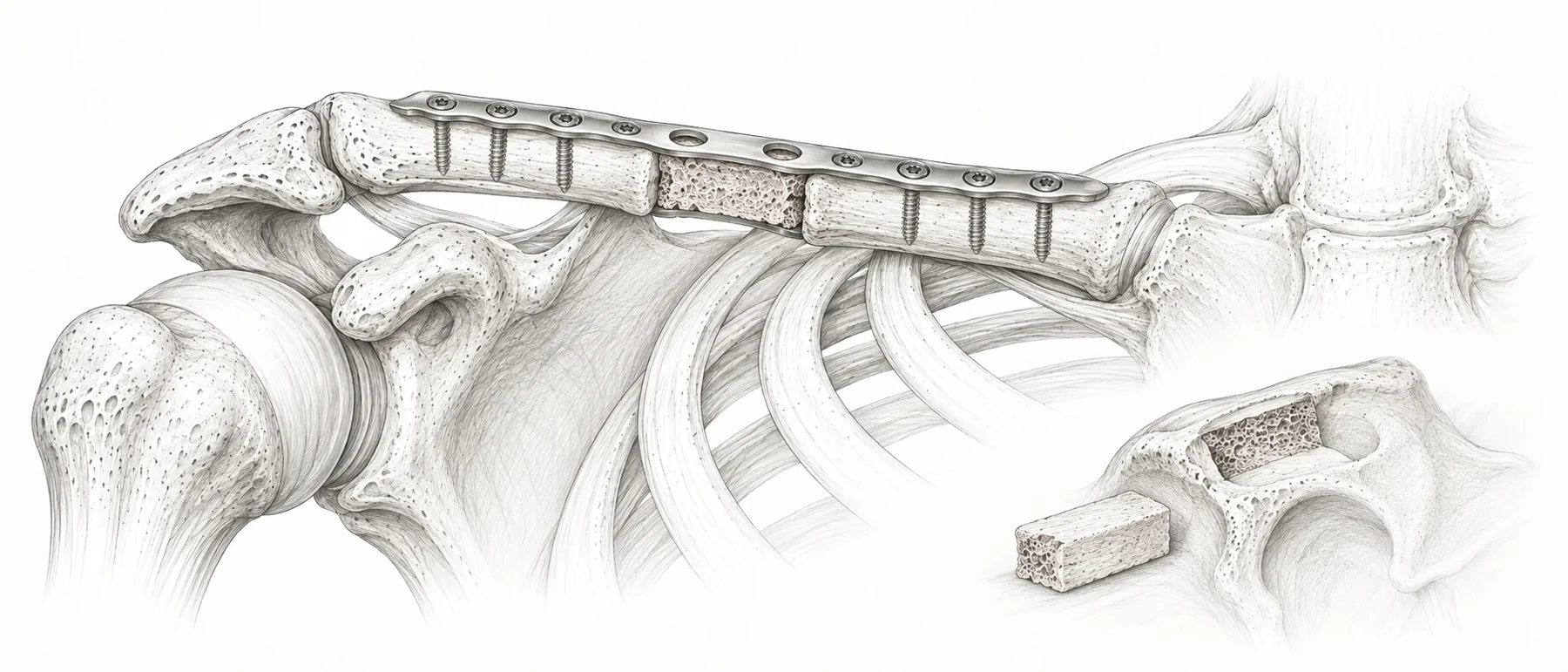
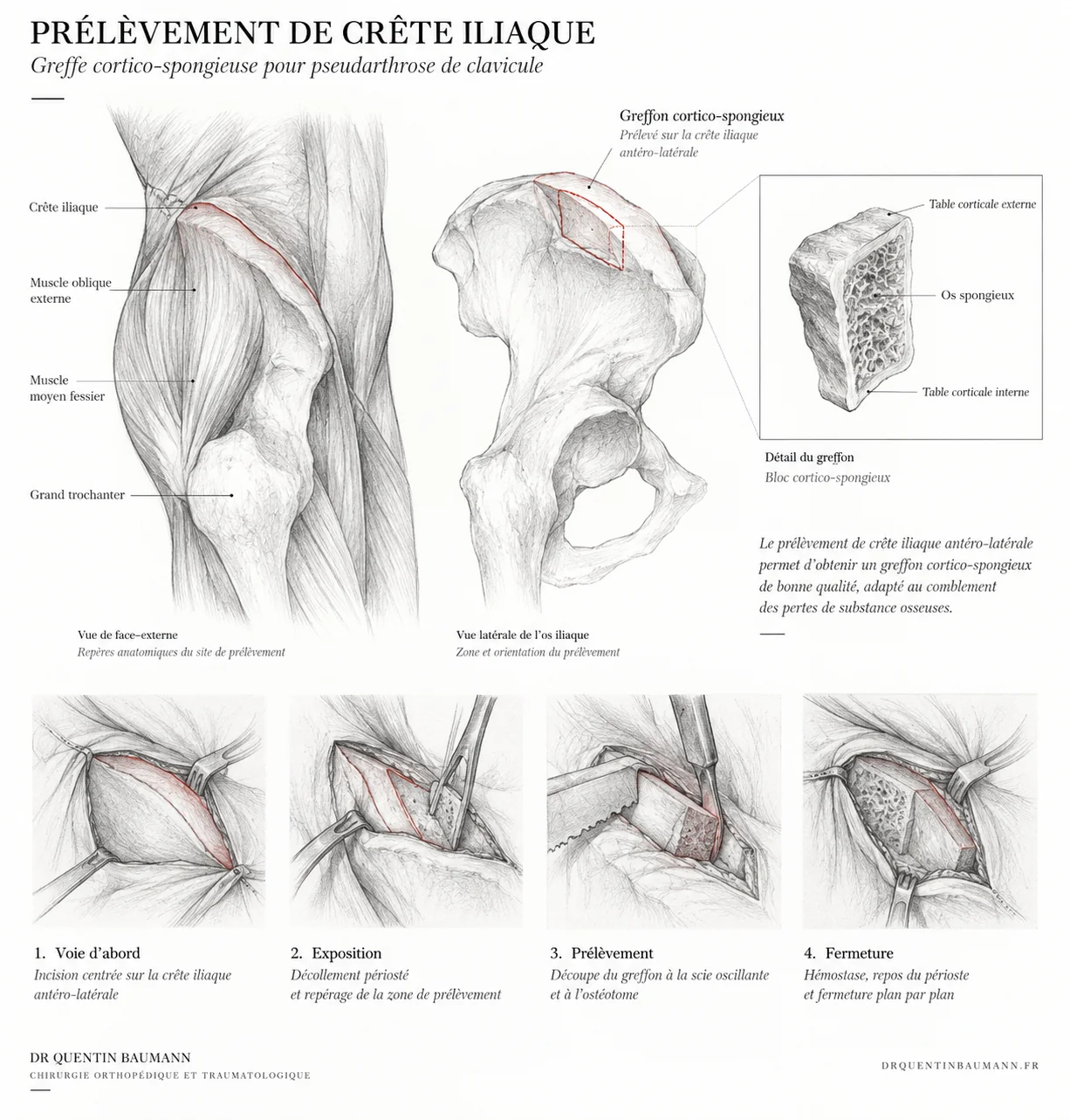
Symptomatic established nonunion may be treated by careful excision of the fibrous nonunion, preparation of viable bone ends and stable fixation using a long plate. In selected defects, an autologous corticocancellous graft harvested from the anterior iliac crest restores bone stock and supports healing. A 9- or 10-hole plate with a screw-free central bridge is one possible construct, not a universal rule. The graft donor site can itself be painful.
Recovery after surgery
A protective sling or Dujarier-type immobilisation may be used for about three weeks. Finger, wrist and elbow motion starts early; gentle shoulder motion and physiotherapy generally begin around week three, according to fixation stability. Analgesia is tailored to symptoms. Clinical and radiographic follow-up is necessary; CT at about three months may be useful in complex reconstructions but is not always required. Contact sports and fall-risk activities resume only after healing is confirmed.
Risks and warning symptoms
Possible complications include infection, scar sensitivity, numbness, painful hardware, loss of fixation and persistent nonunion. Injury to the brachial plexus or major subclavian vessels is rare but potentially serious. Iliac crest harvest adds pain, haematoma and sensory risks. Seek prompt care for a cold or numb hand, severe swelling, breathing difficulty, fever or wound discharge.
Frequently asked questions
Does every visible lump require surgery? No, not if it is well tolerated. Is CT always essential? No, it is most useful when x-rays are unclear or an operation is being planned. Must every nonunion receive a graft? No, grafting depends on bone loss and biology. Can smoking jeopardise union? Yes—complete cessation is crucial. When can sport resume? Gradually, after objective evidence of healing.
Scientific references
AAOS, Clinical Practice Guideline: Treatment of Clavicle Fractures (2022). Wright and Della Rocca, JAAOS (2023). Complications and Outcomes After Surgical Intervention in Clavicular Nonunion, JBJS Reviews (2023).